Chennai bulk waste generators: 15 days to register under SWM Rules 2026
If your building generates 100 kg of waste a day — or uses 40,000 litres of water — GCC now expects dual-portal registration, four-stream segregation and proof of where the waste goes.
Apartments, IT parks, hospitals, hotels and institutions must register on GCC and CPCB portals within 15 days. Fines of ₹5,000–₹25,000 already applied; ~39% of identified bulk generators still pending.
Chennai bulk waste generators: 15 days to register under SWM Rules 2026 — Chennai, Chennai local news
Story type
Civic / solid waste enforcement
Neighbourhood or area
Greater Chennai (all 15 GCC zones); OMR relevance
Event / review
4 July 2026 GCC review and registration directions
Category
Chennai
Verification status
Based on cited media and Corporation-reported figures; portal requirements may be updated by zonal notices
Solid Waste Management Rules
Quick answers
Straight facts from this report for readers — and for search and answer engines. This is a news summary, not legal advice.
Direct answer
Greater Chennai Corporation has directed bulk waste generators across all 15 zones to complete mandatory online registration — on both the GCC bulk-waste portal and the CPCB solid-waste portal — generally within 15 days of the Corporation direction or zonal notice, under the Solid Waste Management Rules, 2026.
Reporting cites fines of ₹5,000 to ₹25,000. In June 2026, GCC reportedly collected ₹5.95 lakh from 120 bulk waste generators. Registration alone is not full compliance: four-stream segregation, wet-waste processing and authorised collection still apply.
From this story
- Who must register
- Large apartments, IT parks, hospitals, hotels, malls, colleges, marriage halls, factories and similar premises that meet any BWG threshold.
- Portals
- GCC: gccservices.in/bulkwaste/register · CPCB: swm.cpcb.gov.in/register
- Reported fine range
- ₹5,000 to ₹25,000 under the Solid Waste Management Rules, 2026, based on contemporaneous media coverage of GCC enforcement.
National framework (shared across this series)
The Solid Waste Management Rules, 2026 were notified by the Union Ministry of Environment, Forest and Climate Change through S.O. 388(E) dated 27 January 2026, published in the Gazette on 28 January, and came into force on 1 April 2026. They supersede the Solid Waste Management Rules, 2016.
- Four waste streams
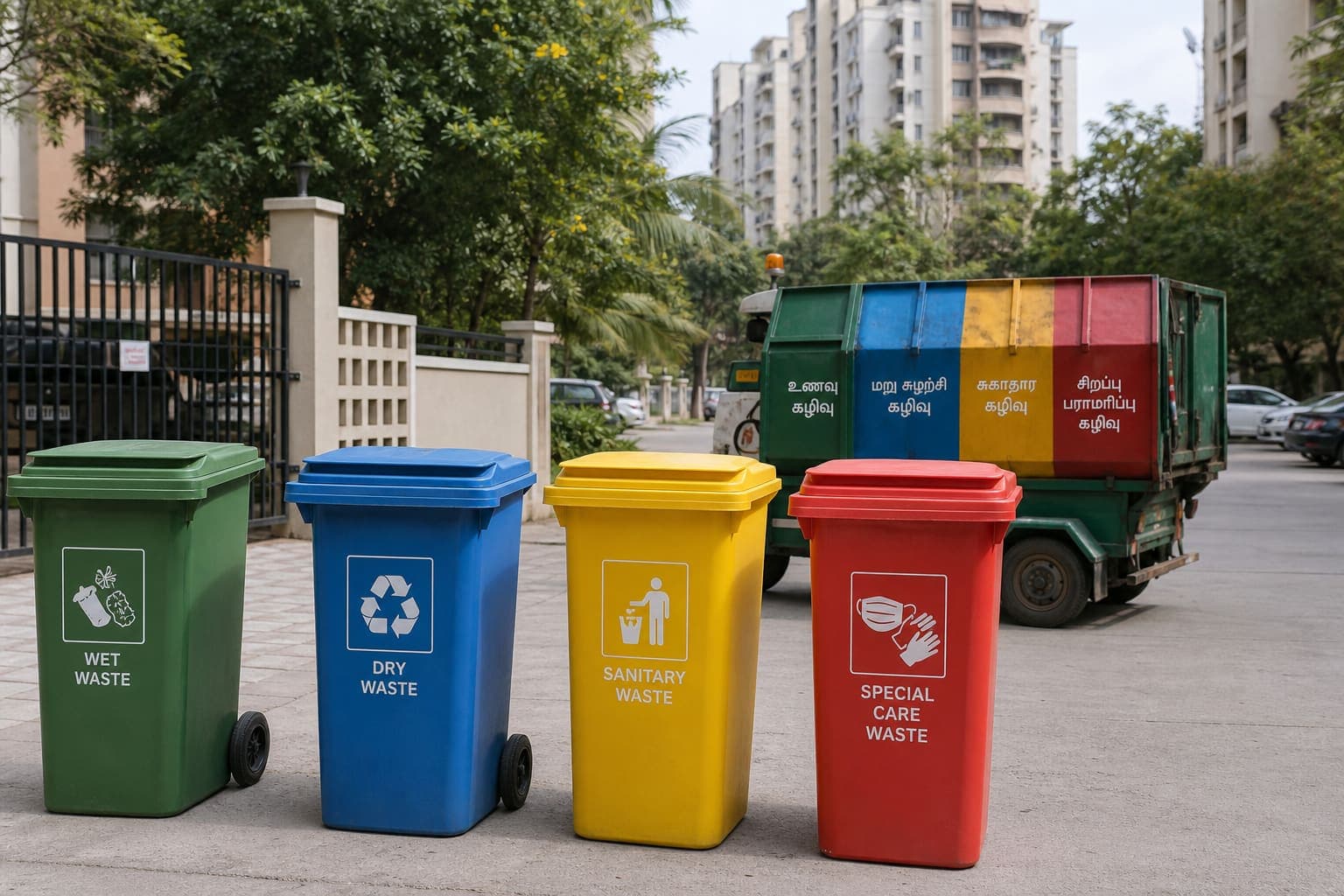
- Under the 2026 Rules, generators must segregate wet (biodegradable), dry (recyclable), sanitary, and special-care waste.
- Bulk Waste Generator (BWG)
- A premises may qualify if it has 20,000 sq m or more built-up area, uses 40,000 litres or more of water a day, or generates 100 kg or more of solid waste a day. Meeting any one threshold can be enough.
- Local bye-law deadline
- Rule 39 requires every urban local body to frame bye-laws incorporating the new provisions by 31 March 2027. As of July 2026 reporting, Greater Chennai Corporation is still inside that transition window.
Always verify current obligations from the Gazette notification, GCC or state circulars, sanctioned bye-laws, and any notice issued to your premises. Where an official text differs from this summary, the official text prevails.
What we know
Summary
Chennai, July 2026 — If you run a large apartment, IT park, hospital, hotel, mall, college, marriage hall or factory in Chennai, solid waste is no longer only a housekeeping chore. It is a compliance file.
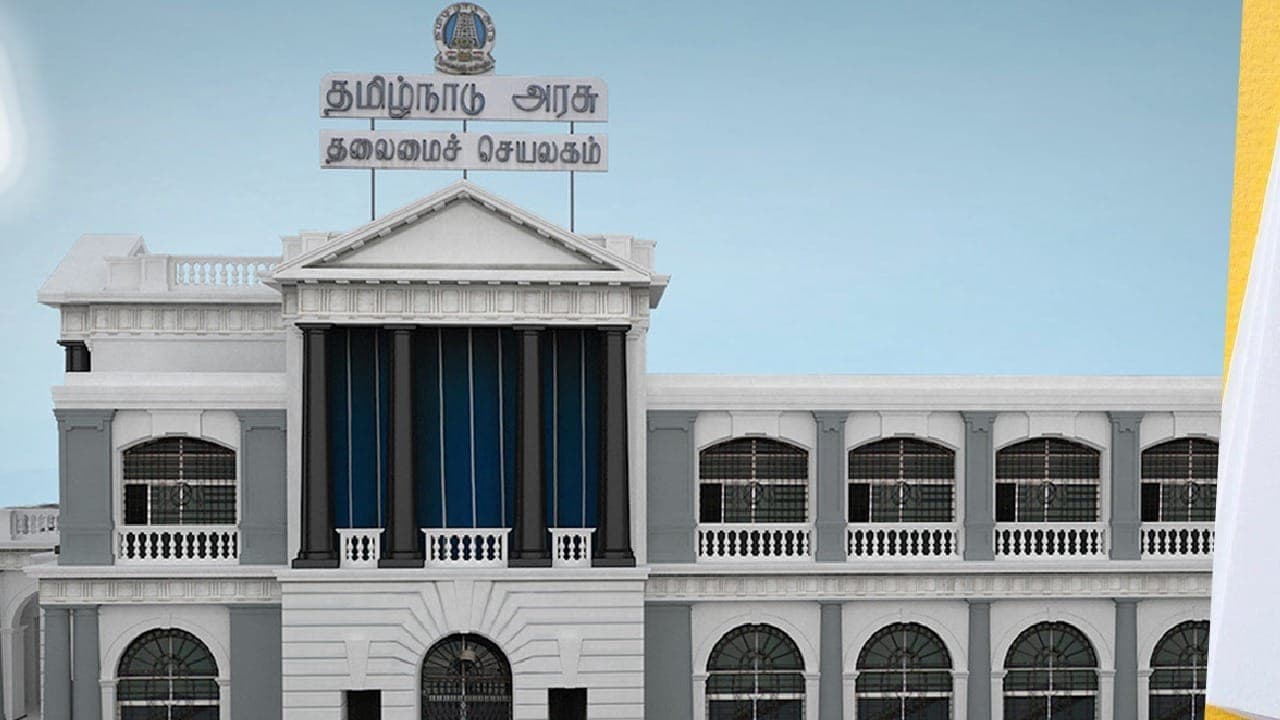
At a review meeting at Ripon Buildings on 4 July 2026, Commissioner Dr G.S. Sameeran directed officials to tighten implementation of the Solid Waste Management Rules, 2026 across every Corporation zone. Bulk waste generators were told to register with GCC and CPCB, keep records, and submit information on generation, processing, transport and disposal.
The rules took effect on 1 April 2026. The first months were mostly awareness. July marks the move into inspections, digital reporting and fines.
Key facts
| Item | Detail |
|---|---|
| Civic body | Greater Chennai Corporation (15 zones) |
| Legal frame | Solid Waste Management Rules, 2026 |
| Who must act | Bulk waste generators — apartments, campuses, hotels, hospitals, institutions, commercial premises |
| Registration window | Within 15 days of direction / zonal notice |
| Portals | GCC · CPCB |
| Identified BWGs | 3,203 |
| Registered | 1,944 (~60.7%) |
| Pending | ~1,259 (~39.3%) |
| June penalties | ₹5.95 lakh from 120 generators |
| Fine range reported | ₹5,000–₹25,000 |
| City waste collected (approx.) | 6,150 tonnes/day |
| Reported BWG waste | ~600 tonnes/day |
| Four streams | Wet · Dry · Sanitary · Special-care |
Are you a bulk waste generator?
You may qualify if any one of these is true:
| Threshold | Limit |
|---|---|
| Built-up / floor area | 20,000 sq m or more |
| Daily water use | 40,000 litres or more |
| Daily solid waste | 100 kg or more |
You do not need all three. A dense high-rise can cross 100 kg/day on a modest plot.
Rough apartment math
- ~200 households at ~500 g each ≈ 100 kg/day
- ~300 households at ~400 g each ≈ 120 kg/day
- A hotel kitchen, hospital or IT cafeteria can cross the line on food waste alone
Premises most likely to be affected in Chennai
- Large apartment associations and gated communities
- IT parks and corporate campuses (including OMR)
- Hospitals and large clinics
- Hotels, restaurants and central kitchens
- Colleges, universities, hostels and schools
- Shopping malls, markets and multiplexes
- Marriage halls and convention centres
- Factories, offices and multi-tenant commercial buildings
- Transport terminals and large public institutions
What has happened now?
GCC has instructed qualifying premises to complete online registration quickly or face action under the 2026 rules.
Between 1 and 30 June 2026, the Corporation reportedly fined 120 bulk generators for a total of ₹5.95 lakh — about ₹4,958 per action on average, near the lower end of the ₹5,000–₹25,000 range.
Reporting also flags a practical problem: some large generators still dump mixed waste into roadside Corporation bins. That overflows public bins, contaminates recyclables, and adds pressure on Perungudi and Kodungaiyur.
What registered premises must still do
- Buy suitable colour-coded bins at their own cost.
- Segregate at source into four streams — starting inside homes, kitchens, offices and wards, not only at the gate.
- Process wet (biodegradable) waste on-site where required and feasible (composting, biomethanation or another approved method).
- Hand dry, sanitary and special-care waste to GCC or authorised agencies — and keep proof.
- Maintain generation, processing, transport and disposal records.
- Upload periodic information on the GCC and CPCB portals (including quarterly reporting described in recent coverage).
Four-stream segregation: the new basic standard
“Wet vs dry” alone is no longer enough.
| Stream | What goes in | Typical destination |
|---|---|---|
| Wet | Food waste, peels, flowers, compostable organics | On-site composting / biomethanation |
| Dry | Paper, cardboard, plastic, metal, glass, packaging | Material recovery / recycling |
| Sanitary | Pads, diapers, tampons, similar hygiene waste (securely wrapped) | Authorised separate handling |
| Special-care | Bulbs, expired medicines, paint containers, certain batteries, chemical containers | Authorised collection points |
Mixing streams dirty recyclables, spoil compost, and expose conservancy workers to health risks. If collection carts or vehicles remix segregated waste, earlier effort is wasted — residents and associations should report that.
Action guide by stakeholder
Apartment associations / RWAs
- Check built-up area, water use and run a 7-day waste audit (weekdays + weekend).
- Complete both GCC and CPCB registrations; save acknowledgements.
- Fix the chain: homes → floor collection → waste room → vehicle — without remixing.
- Audit the wet-waste plant: capacity, downtime, odour, leachate, compost use.
- Verify vendor authorisation, weight slips and destination facilities.
- Keep a compliance file: registrations, audits, contracts, returns, inspection notes.
- Brief residents in Tamil and English on which bin to use and how to wrap sanitary waste.
Residents inside bulk-generator buildings
- Keep separate containers for wet and dry waste.
- Wrap sanitary waste securely; never mix it with recyclables.
- Store bulbs, medicines and batteries in a labelled special-care box until authorised collection.
- Do not dump bags at gates, drains or roadside bins meant for ordinary household routes.
- Ask the association whether dual-portal registration is done — and whether the composting unit actually runs.
IT parks and corporate campuses
- Map waste from cafeterias, floors, pantries, events and landscaping.
- Spell out landlord vs tenant responsibility in facility rules and leases.
- Track ESG-ready metrics: waste per employee, segregation rate, landfill diversion.
- Treat cafeteria food waste as prevention first, processing second.
Hotels, marriage halls and restaurants
- Measure kitchen and event waste; do not send function waste to roadside bins.
- Put segregation and disposal clauses in caterer and decorator contracts.
- Keep used-cooking-oil and surplus-food handling records.
Hospitals and clinics
- Keep municipal solid waste and biomedical waste systems separate.
- Train staff by department; label carts; use authorised vendors for each stream.
- Do not conflate biomedical and municipal reporting.
Schools and colleges
- Cover canteens, hostels, labs and events in the waste plan.
- Student clubs can support audits and awareness — they cannot replace institutional compliance.
Why this matters for OMR and south Chennai
OMR and nearby corridors concentrate high-rise apartments, IT campuses, food courts, hotels and hostels — many of which are likely bulk generators. Improper disposal here can block drains, worsen local flooding, pollute channels linked to Pallikaranai Marsh, and add load to the Perungudi waste landscape. For campuses and associations, waste compliance is now a governance and reputation issue as well as a civic duty.
Chennai’s waste scale (context)
GCC states that about 6,150 metric tonnes of garbage are collected citywide every day — roughly 256 tonnes per hour, or about 71 kg every second. Bulk generators are reported to produce around 600 tonnes/day (~10% of that municipal figure), while national framing often puts bulk generators near 30% of total solid waste. The gap underlines why Chennai needs clearer public waste data — and why large premises cannot treat municipal bins as their private disposal system.
Data snapshot
| Metric | Figure |
|---|---|
| Identified bulk generators | 3,203 |
| Registered | 1,944 (~60.7%) |
| Not yet registered | ~1,259 (~39.3%) |
| June enforcement actions | 120 |
| June penalties collected | ₹5.95 lakh |
| Approx. average fine | ~₹4,958 |
| Reported BWG daily waste | ~600 tonnes |
| Registration window | 15 days |
Note: Registration is not full compliance. A premises can register and still mix waste, run a non-functional composting unit, or fail to file accurate returns.
What this means in Chennai
Local impact, institutions, and what residents should watch next.
Why Chennai readers should care
Chennai cannot manage thousands of tonnes of daily waste through street collection and dumpyards alone. When large apartments and campuses push mixed waste into public bins, every resident pays — through overflow, odour, blocked drains and landfill pressure.
The 2026 rules shift responsibility to where waste is generated. For households inside bulk-generator premises, segregation starts in the kitchen. For associations and facility managers, waste is now a compliance function like fire safety or STP operation.
What changes for citizens
- Ask your association whether the premises meets any bulk-generator threshold.
- Confirm both portal registrations and keep copies.
- Follow four-stream segregation at home; wrap sanitary waste separately.
- Check that wet-waste equipment actually runs — not only that a machine was purchased.
- Demand authorised collection receipts and ask where dry and sanitary waste go.
- Watch whether Corporation and contractor vehicles preserve segregation after pickup.
Quick compliance checklist
Bulk generators: threshold check → GCC + CPCB registration → waste audit → four-stream bins → wet-waste processing → authorised vendors → daily records → portal returns → inspection readiness.
Residents: four streams · wrap sanitary waste · no roadside dumping of bulk loads · report remixing.
Corporation (public expectation): zone-wise registration data · authorised vendor lists · verified portal returns · worker protection · segregated collection · follow-up inspections.
What to watch next
- Whether the pending registration count (~1,259) falls after the 15-day push
- Whether inspections go beyond paperwork into segregation and wet-waste plants
- Whether authorised vendor lists are easy to find zone-wise
- Whether roadside overflow near large premises reduces
- Whether landfill intake at Perungudi and Kodungaiyur trends down over time
Related reading on mychennaicity.in
Official sources
This page is an editorial rephrase and analysis based on publicly reported information. Read the original source for full context.
FAQ
Under the Solid Waste Management Rules, 2026, a premises may qualify if it has 20,000 sq m or more built-up area, uses 40,000 litres or more of water a day, or generates 100 kg or more of solid waste a day. Meeting any one threshold can be enough.
Explore the site
More from mychennaicity.in
Chennai today, local news, jobs, events, gold rate, and a moderated WhatsApp community — one city desk.
- Chennai today60-second morning card
- WhatsApp communityModerated Chennai updates
- Chennai local newsCivic desk & neighbourhood stories
- Afford this areaTake-home vs rent check
- Jobs in ChennaiOpen roles across the city
- Which Chennai are you?Playful neighbourhood quiz
New here? How to use mychennaicity.in — guides for residents, job seekers, admins, and more.
Promote your business to Chennai readers
Get visibility across local news, events, jobs and area pages.
Reader group: The my chennai city reader group — short updates and civil discussion, same standards as the site. Opens WhatsApp after you tap.
Tip the Chennai desk
Spotted something we should look at — safety, civic works, consumer rip-offs, or a human story? A short message is enough; links and dates help.