CURRENT SYSTEM: 15 ZONES | FUTURE PLAN: 20 ZONES | 23-ZONE MAP: HISTORICAL 2022 PROPOSAL
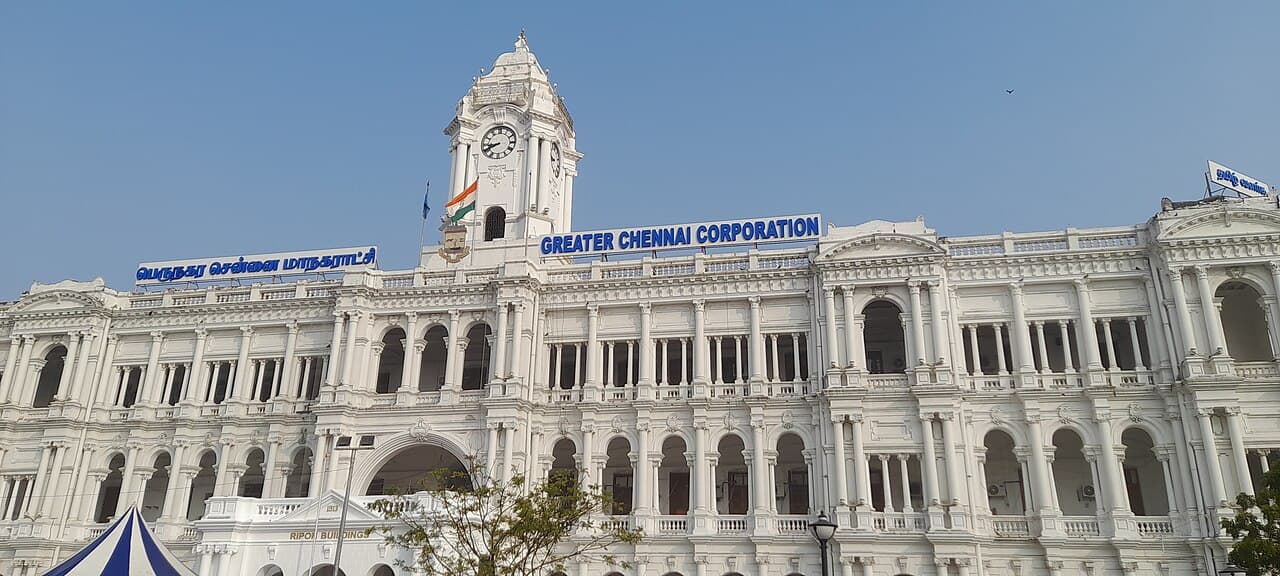
Greater Chennai Corporation · Civic explainer
Chennai’s Zone Map Is Changing: Current 15 Zones, Proposed 20 Zones and the Old 23-Zone Map Explained
Chennai still runs on 15 Corporation zones and 200 wards. The 20-zone plan is approved but not operational; the viral 23-zone map is a 2022 historical proposal.
Chennai has not yet started operating under 20 or 23 Corporation zones
A map showing Chennai divided into 23 Greater Chennai Corporation zones has circulated online since 2022. More recent reports say that the Tamil Nadu government has approved a different restructuring plan under which the city would be reorganised into 20 zones.
These two maps are not the same proposal. More importantly, neither should presently be used as the final authority for identifying a resident’s operational Corporation zone.
As of 14 July 2026, the Greater Chennai Corporation’s official ward-map portal, councillor directory, council information and zonal services continue to identify Chennai through 15 Corporation zones and 200 wards. The proposed 20-zone arrangement has been approved and mapped, but public statements have indicated that implementation is linked to the end of the present Corporation council’s tenure and the next civic election cycle.
Current advice: Continue using the official 15-zone and 200-ward system until a new government notification and updated GCC services formally bring the revised arrangement into effect.
Why Chennai residents should understand Corporation zones
A Corporation zone is not merely a coloured section on a map. It is one of the principal administrative units through which the Greater Chennai Corporation organises local civic services.
A resident’s zone can affect which zonal office, assistant commissioner, engineering division, sanitation unit, public-health team, revenue office and ward committee handles the locality. Zone-level administration is connected with interior roads, stormwater drains, streetlights, solid-waste collection, public-health inspections, mosquito-control operations, birth and death registration, property-tax administration, trade licences, building-related civic processes, parks, encroachments, street-vending administration, disaster preparedness and ward-committee decisions.
Under the Tamil Nadu Urban Local Bodies Act, wards committees may comprise multiple contiguous wards. Each wards committee should have a separate office within its territorial limits. Councillors from the included wards are members; one is elected chairman. GCC describes each existing zone as having a ward committee whose resolutions go to the Corporation Council, with meetings held at the zonal office.
This is why changing a zone boundary may affect more than the name appearing beside an address. It can alter the civic office through which complaints, works, inspections, budgets and elected representation are coordinated.
How a Chennai civic issue moves through the system
- 1Resident
- 2Ward / locality
- 31913 or councillor
- 4Zonal engineering
- 5Ward committee / zonal office
- 6GCC Council (if escalated)
Pathways vary by case. Use 1913 and your current ward/zone until a new gazette notification updates official systems.
The three different Chennai zone maps causing confusion
Residents keep encountering three different maps: the operational 15-zone system, a 2022 media proposal for 23 zones, and the 2025 approved plan for 20 zones. Mixing them produces wrong office referrals and viral misinformation.
The arrangement still displayed by Greater Chennai Corporation: 15 zones, 200 wards, three regions (North, Central, South), and one ward committee per zone.
- GCC ward-map selector lists Zones 1–15 (Thiruvottiyur to Sholinganallur)
- Chennai district administration publishes the same ward allocation
- Use this map for zonal offices, councillors and civic complaints today
1. The current 15-zone map
This is the operational arrangement still displayed by the Greater Chennai Corporation: 15 zones, 200 wards or divisions, three broad administrative regions (North, Central and South), and one ward committee for each zone.
2. The 23-zone proposal reported in 2022
That concept would have reorganised the 15 zones into 23, with boundaries designed to correspond more closely with Assembly constituencies — eight zones in North Chennai, eight in Central and seven in South. It indicated that areas such as Old Washermenpet, Egmore and Mogappair could move between zonal administrations. That configuration did not become Chennai’s operational system.
3. The 20-zone restructuring announced in 2025
In February 2025, the Tamil Nadu government announced that GCC zones would increase from 15 to 20, citing equitable resource allocation, better staff distribution, improved civic-service delivery and reduced imbalance between densely populated and less populated zones. The structure reportedly used projected population, electorate, tax assessments, roads and streets, street density and population density.
Chennai’s current official 15-zone structure
The numbering around Adyar and Perungudi is unusual. Zone 14 contains Wards 168 and 169 as well as Wards 183 to 191, while Zone 13 contains Wards 170 to 182. Residents should therefore avoid assuming their zone only from the numerical sequence.
Selected current zone
Zone 1: Thiruvottiyur
Areas often associated: Thiruvottiyur, Tiruvottiyur, Ennore
Councillor and zonal-office addresses change; confirm on the GCC directory before visiting. Gazette notification prevails if records conflict.
| Zone | Name | Wards | Region |
|---|---|---|---|
| 1 | Thiruvottiyur | 1–14 | North |
| 2 | Manali | 15–21 | North |
| 3 | Madhavaram | 22–33 | North |
| 4 | Tondiarpet | 34–48 | North |
| 5 | Royapuram | 49–63 | North |
| 6 | Thiru-Vi-Ka Nagar | 64–78 | North |
| 7 | Ambattur | 79–93 | Central |
| 8 | Anna Nagar | 94–108 | Central |
| 9 | Teynampet | 109–126 | Central |
| 10 | Kodambakkam | 127–142 | Central |
| 11 | Valasaravakkam | 143–155 | Central |
| 12 | Alandur | 156–167 | South |
| 13 | Adyar | 170–182 | South |
| 14 | Perungudi | 168, 169 and 183–191 | South |
| 15 | Sholinganallur | 192–200 | South |
The safest method is to search using the official GCC ward-map or “Know Your Zone and Division” service. The GCC portal itself advises users to refer to the relevant gazette notification if a discrepancy is found.
How Chennai arrived at the present 15-zone structure
Before the major expansion associated with 2011, Chennai Corporation covered approximately 174 square kilometres. The government enlarged the Corporation by amalgamating nine municipalities, eight town panchayats and twenty-five village panchayats — expanding the area to approximately 426 square kilometres.
Newly incorporated municipalities included areas such as Thiruvottiyur, Manali, Madhavaram, Ambattur, Maduravoyal, Valasaravakkam, Alandur and Ullagaram–Puzhuthivakkam. Southern and peripheral settlements included Kottivakkam, Palavakkam, Neelankarai, Injambakkam, Karapakkam, Okkiyam Thuraipakkam, Madipakkam, Semmancheri and Uthandi. Government orders subsequently provided for 200 territorial divisions and 15 wards committees, which became the present zones.
Public systems still on 15 zones
Official GCC ward map, councillor directories and zonal services continue under 15 zones and 200 wards.
Why the present zones are considered uneven
The 2011 arrangement grouped older, densely developed parts of Chennai with large peripheral areas that were still urbanising. Over time, zones developed very different administrative burdens: area versus density, taxable properties, road length, commercial establishments, informal settlements, flood exposure, waste-generation points and travel distance to the zonal office.
Administrative equality is not the same as numerical equality. A workable zoning model must weigh population, density, geographic area, wards, properties, road length, commercial activity, waste burden, drainage and flood exposure, office accessibility, staff availability, complaints, infrastructure deficit and future growth — together.
Two zones with ten wards each can still have completely different workloads
Do not treat ward count alone as proof that a zone is overburdened or underburdened.
What the 2025 proposed 20-zone data shows
The reported 20-zone map was based on a projected 2023 population derived from the 2011 Census, together with administrative and property-related data. Averages are only mathematical reference points; individual proposed zones were not designed to be identical.
Reported figures from the proposed 20-zone map—not current operational zone statistics.
1. Population extremes
2. Geographic-area extremes (sq. km)
3. Ward-count extremes
4. Property-count extremes
Reported city totals underlying the proposal: population 79,53,147 · properties 13,82,848 · averages ≈ 3,97,657 people and 69,142 properties per proposed zone.
The population of the largest proposed zone was more than four times that of the least populated proposed zone. This illustrates that the restructuring was not based on making every zone numerically identical. Geography, density, properties, roads and administrative practicality were considered together.
What happened to the earlier 23-zone plan?
The 2022 proposal sought to reorganise Chennai into 23 zones, broadly aligning civic zones with Assembly constituencies. Residents and councillors raised concerns about staffing, zonal-office locations, accessibility, disruption of familiar local relationships, divided roads or neighbourhoods, property-tax implications, consultation and utility-boundary coordination.
The 23-zone concept did not become the final plan announced in 2025. The later government decision settled on 20 zones rather than 23. The old map remains useful as a record of how restructuring was being considered, but it should not be used to identify a current or guaranteed future zone.
Correct caption for the circulated 23-zone image: A 2022 proposal that examined reorganising Chennai into 23 Corporation zones. This is not Chennai’s current operational zone map and is different from the 20-zone structure announced in 2025.
Is the 20-zone plan operational now?
The evidence available as of July 2026 supports this conclusion: the 20-zone restructuring is an approved policy plan, but Chennai’s public-facing Corporation administration continues to function through the existing 15-zone structure.
In April 2025, Mayor R. Priya said implementation would take place after the present Corporation council’s tenure, with the change linked to 2027. In May 2026, when asked when the 15-to-20-zone change would occur, the GCC Commissioner stated that increasing the number of zones was a policy decision of the government.
- GCC’s official ward-map selector still lists 15 zones.
- GCC’s council page describes 15 zones and one ward committee per zone.
- Current zonal contacts and councillor directories remain organised under Zones 1 to 15.
- A May 2026 waste-management implementation report said zonal officials in all 15 zones would assist bulk-waste generators.
A Corporation zone is also a wards committee. The law links committee terms to the council term and generally expects territorial limits not to be altered before a committee’s term expires. Implementation therefore needs notification, office identification, staff redeployment, software reconfiguration, complaint-routing updates, budget and contract changes — more than renaming areas on a map.
What may change — and what will not
Under a new zone system, a ward may be assigned to a different zonal office; assistant commissioners, engineers, sanitation and public-health teams may be redistributed; complaint routing, sanitation contracts, road and streetlight files, licence desks and ward-committee composition may shift. Accessibility of the new office matters — especially for senior citizens, traders without private transport and flood-prone neighbourhoods such as those raised in Manali debates around Kosasthalaiyar and Puzhal surplus water.
A change in zone does not by itself prove that property tax will rise. Tax depends on land area, built-up area, use, location, street classification and notified rules — not merely a new zone number.
A Corporation-zone change also does not automatically rewrite PIN code, police-station jurisdiction, Assembly or parliamentary seats, revenue taluk, CMDA classification, Metro Water operational area, electricity section, school district or PDS shop.
My Chennai Jurisdictions — each boundary has its own authority. A zone change does not automatically rewrite the rest.
GCC zone and ward
Authoritative for civic complaints and zonal services today (15 zones).
Source: Greater Chennai Corporation ward map / Know Your Zone
Last-updated context: 14 July 2026 (editorial verification pass)
Councillor
Elected for the ward, not automatically identical to Assembly MLA.
Source: GCC councillor directory by zone and ward
Last-updated context: 14 July 2026 (editorial verification pass)
Assembly constituency
Separate from Corporation zone boundaries.
Source: Election Commission / state delimitation
Last-updated context: 14 July 2026 (editorial verification pass)
Parliamentary constituency
Does not change merely because a Corporation zone is redrawn.
Source: Election Commission
Last-updated context: 14 July 2026 (editorial verification pass)
Police station
Criminal jurisdiction is independent of GCC zones.
Source: Greater Chennai Police / local station maps
Last-updated context: 14 July 2026 (editorial verification pass)
Metro Water area
Water operations often cut across Corporation zone lines.
Source: CMWSSB depot / distribution maps
Last-updated context: 14 July 2026 (editorial verification pass)
Tangedco section
Electricity sections are not Corporation wards.
Source: Tangedco distribution section maps
Last-updated context: 14 July 2026 (editorial verification pass)
Revenue taluk
Land records follow revenue hierarchy, not GCC zones.
Source: Revenue department / Chennai district
Last-updated context: 14 July 2026 (editorial verification pass)
PIN code
Postal delivery areas do not auto-update with zone maps.
Source: India Post
Last-updated context: 14 July 2026 (editorial verification pass)
Planning authority
Planning classification is distinct from civic zone administration.
Source: CMDA / GCC depending on function
Last-updated context: 14 July 2026 (editorial verification pass)
A practical resident checklist
Before implementation: stay on the 15-zone system, ignore undated viral maps, save tax and licence records, note complaint numbers, and follow gazette or GCC notices. When implementation is notified: check whether only the zone changed or the ward also changed, confirm the new zonal office, councillor and wards-committee structure, and recheck portals before submitting physical documents.
Why you may also see reports referring to 22 zones
Separate reports during boundary-delimitation discussions referred to a broader Greater Chennai expansion involving adjoining areas and as many as 22 zones. Those should not be mixed with the existing 15-zone structure or the separately announced 20-zone reorganisation. The city faces three distinct questions: how to divide existing GCC area; whether to merge surrounding local bodies; and how to redraw wards after any expansion. MyChennaiCity tools should therefore use version-controlled datasets rather than one permanent hard-coded map.
Frequently asked questions
No. The 23-zone map belongs to a proposal reported in 2022. It is not the present operational map.
Conclusion: use the current 15-zone map, but prepare for change
The map that prompted much of the online confusion is an important piece of Chennai’s civic-administration debate — but it is not Chennai’s current zone map. The proposal later evolved from 23 zones to an approved 20-zone plan. As of July 2026, official public systems still run through 15 zones and 200 wards.
Use the current GCC zone and ward for all official work. Treat the 20-zone map as a future administrative plan. Treat the 23-zone image as a historical proposal. Verify every change through a government notification and the updated GCC portal.
A better map is useful. A better functioning local government — with accessible offices, adequate staff, transparent data and a clear transition process — is the real objective.
Information verified against available official and reported sources as of 14 July 2026.
Explore the site
More from mychennaicity.in
Chennai today, local news, jobs, events, gold rate, and a moderated WhatsApp community — one city desk.
- Chennai today60-second morning card
- WhatsApp communityModerated Chennai updates
- Chennai local newsCivic desk & neighbourhood stories
- Afford this areaTake-home vs rent check
- Jobs in ChennaiOpen roles across the city
- Which Chennai are you?Playful neighbourhood quiz
New here? How to use mychennaicity.in — guides for residents, job seekers, admins, and more.
Promote your business to Chennai readers
Get visibility across local news, events, jobs and area pages.
Reader group: The my chennai city reader group — short updates and civil discussion, same standards as the site. Opens WhatsApp after you tap.
Tip the Chennai desk
Spotted something we should look at — safety, civic works, consumer rip-offs, or a human story? A short message is enough; links and dates help.