Tamil Nadu Electricity Bill Calculation 2026: Why Your June TNEB Bill May Be Higher
Consumer desk — slab math, OMR apartment scenarios, 500-unit cliff, and how to audit your TNPDCL bill.
Chennai domestic bills are bi-monthly LT I-A slabs: 200 free units if you stay ≤500 kWh per cycle, telescopic rates above 500. June bills often bundle April–May AC load — use the official TNPDCL calculator before disputing.
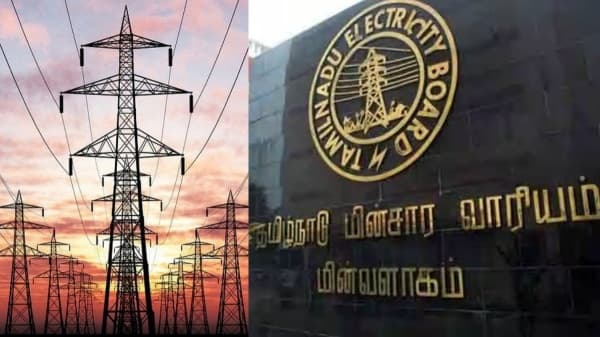
Tamil Nadu Electricity Bill Calculation 2026: Why Your June TNEB Bill May Be Higher — Consumer, Chennai local news
Who supplies Chennai?
TANGEDCO (generation and distribution). Online payment and the tariff calculator are branded TNPDCL on tnebnet.org.
Billing cycle
Bi-monthly for most domestic connections (roughly two calendar months per bill).
Tariff category
LT I-A — domestic (individual homes; apartments use separate meters per flat or common supply for shared loads).
Free units (≤500 bi-monthly)
First 200 units at ₹0
Free units (>500 bi-monthly)
First 100 units at ₹0 (telescopic regime)
July 2025 revision
TNERC order raised tariffs 3.16% on paper; Tamil Nadu subsidised domestic LT I-A so household slab rates did not increase — see The Hindu.
Official calculator
tnebnet.org — Bill Calculator / Tariff Check
Advertisement carousel. Rotation pauses when you hover or focus inside.



What we know
What is one “unit” on your EB bill?
On Tamil Nadu electricity bills, one unit = one kilowatt-hour (kWh) — the energy used when a 1 kW load runs for one hour.
Examples (approximate):
| Appliance | Typical load | Rough use | Energy |
|---|---|---|---|
| LED tube | ~20 W | 10 hours/day × 60 days | ~12 kWh / bi-month |
| 1.5 ton inverter AC | ~1.2 kW while compressor runs | 8 hours/day × 45 summer days | ~430 kWh / bi-month (single AC — load varies by star rating, set temperature, and room size) |
| 750 W instant geyser | ~0.75 kW | 30 min/day × 60 days | ~23 kWh / bi-month |
Takeaway: Two identical flats on the same street can differ by hundreds of units because of AC hours, geyser type, WFH setups, and old fridges — not because the discom “picked” them.
Domestic slab rates (bi-monthly, LT I-A)
Rates below reflect the subsidised domestic schedule widely published for FY 2025–26 after the state absorbed the July 2025 hike. Verify on the official calculator before paying or disputing.
When bi-monthly consumption is 500 units or less
| Slab (units in the bill period) | Rate |
|---|---|
| 0 – 200 | Free (₹0) |
| 201 – 400 | ₹4.95 / unit |
| 401 – 500 | ₹6.65 / unit |
When bi-monthly consumption is more than 500 units (telescopic)
Crossing 500 units moves you into telescopic billing; free allowance becomes 100 units, not 200.
| Slab (units in the bill period) | Rate |
|---|---|
| 0 – 100 | Free (₹0) |
| 101 – 400 | ₹4.95 / unit |
| 401 – 500 | ₹6.65 / unit |
| 501 – 600 | ₹8.80 / unit |
| 601 – 800 | ₹9.95 / unit |
| 801 – 1,000 | ₹11.05 / unit |
| Above 1,000 | ₹12.15 / unit |
Why June hurts: A bill dated June often covers high-use April–May. One extra week of daytime AC after a heatwave can push you from the ≤500 table to telescopic slabs — the rupee impact is non-linear.
The 500-unit cliff (illustrative)
Estimates only — run your exact units on the TNPDCL calculator.
| Bi-monthly units | Regime | Illustrative energy subtotal (before duty / meter rent) |
|---|---|---|
| 480 | ≤500 (200 free) | ~₹1,860 |
| 520 | >500 telescopic | ~₹2,300 |
| 750 | >500 telescopic | ~₹5,000 |
| 946 | >500 telescopic | ~₹6,600 |
The gap between 480 and 520 units is far wider than “40 extra units × one rate” because the free-unit rule and slab stack change.
OMR corridor scenarios (Perungudi, Sholinganallur, Navalur)
These are worked examples for Chennai’s IT-corridor apartment belt — not your exact bill. Substitute your meter reading.
Scenario A — 3BHK flat, Perungudi, ~946 units bi-monthly
Profile (illustrative): Two inverter ACs running most nights, WFH laptops, double-door fridge, RO pump, balcony lights, lift share billed separately.
| Component | Illustrative units | Rate applied | Illustrative charge |
|---|---|---|---|
| 0 – 100 | 100 | Free | ₹0 |
| 101 – 400 | 300 | ₹4.95 | ₹1,485 |
| 401 – 500 | 100 | ₹6.65 | ₹665 |
| 501 – 600 | 100 | ₹8.80 | ₹880 |
| 601 – 800 | 200 | ₹9.95 | ₹1,990 |
| 801 – 946 | 146 | ₹11.05 | ~₹1,613 |
| Energy subtotal | ~₹6,633 |
Add electricity duty (~5%), meter rent, and any rounding — then compare to your PDF. Do not treat ~₹6,633 as the amount due until you run the official tool.
Scenario B — Same flat, adding a third AC for a guest room
If the third AC adds ~120 units over the same bi-monthly window (illustrative), total use moves from ~946 to ~1,066 units. The extra units fall largely in the ₹12.15 slab once you are already deep in telescopic billing — a ₹1,000+ swing on energy charges alone is plausible before duty. This is why residents say “one more AC doubled the bill” — it is slab math, not a metering error by default.
Scenario C — Navalur ground-floor shop on commercial tariff
A street-facing boutique or café is typically not LT I-A domestic. Commercial low-tension tariffs have different slabs, fixed charges, and no 200-unit free block. A shopkeeper comparing their bill to a neighbour’s flat bill is comparing two tariff books. Check the tariff category code printed on the bill header.
Scenario D — Sholinganallur apartment common supply (lifts + pumps)
Associations with more than 12 units and lifts often have a domestic common supply meter. Press reporting on the July 2025 order noted common-area energy charges moved to ₹8.80/unit (from ₹8.55) with fixed cost ₹110/kW (from ₹107/kW) — costs are split across flats via maintenance invoices, not always visible on your home meter. Ask the RWA for the common meter reading and the per-flat split formula.
Scenario E — Terrace booster pump (600 W) running long hours
A 0.6 kW pump running 6 hours/day for 60 days ≈ 216 kWh bi-monthly — before any AC. OMR blocks with irregular metro water timing often see pumps on timers; a stuck float switch can add hundreds of hidden units.
How to verify your TNPDCL bill (step by step)
- Open the official calculator: tnebnet.org — Tariff Check → choose Domestic tariff and Bi-monthly cycle (use Monthly only if your bill says the cycle is under 35 days).
- Enter consumed units exactly as printed on the bill — not your monthly guess.
- Note the tariff category on the PDF (LT I-A for standard homes). If it says commercial or common supply, domestic slabs do not apply.
- Compare line items: energy charges, duty, meter rent, arrears, subsidies, and round-off — the calculator may not list every legacy adjustment on old connections.
- Cross-check the meter: note the present reading and previous reading; difference should match billed units (subject to MD / average rules on some connections — rare on vanilla domestic).
- Photograph the meter if you dispute; raise a complaint on TNPDCL helpline / section office with consumer number, not just Twitter.
- Apartment residents: confirm whether DG backup or STP loads are on your flat meter vs common meter.
Bill audit worksheet
Use this table when your June bill looks wrong — fill from your PDF and portal.
| Field | Your bill | Calculator / notes |
|---|---|---|
| Consumer number | ||
| Billing period (from – to) | ||
| Tariff / category | ||
| Previous reading | ||
| Present reading | ||
| Billed units | ||
| Regime (≤500 or >500) | ||
| Energy charges | Match calculator | |
| Electricity duty | ~5% of energy charges (verify on bill) | |
| Meter rent | Often ₹25 per cycle on domestic bills | |
| Arrears / credits | ||
| Amount payable |
Savings checklist (Chennai households)
- Set AC to 26 °C with closed doors — each degree lower can add measurable load over 60 days.
- Service AC filters before May; dirty coils raise kWh per hour.
- Replace ageing fridges/geysers — over 10-year appliances are common in older Adyar stock; OMR flats often inherit previous tenant loads.
- Put pumps on timers and fix float switches — silent 24×7 pumps are a classic 200-unit leak.
- Compare LED retrofit for balcony and parking lights if you own the circuit.
- Shift heavy laundry/dishwasher to off-peak if you are on time-of-day pilots (check bill — most domestic LT I-A is still flat energy slabs).
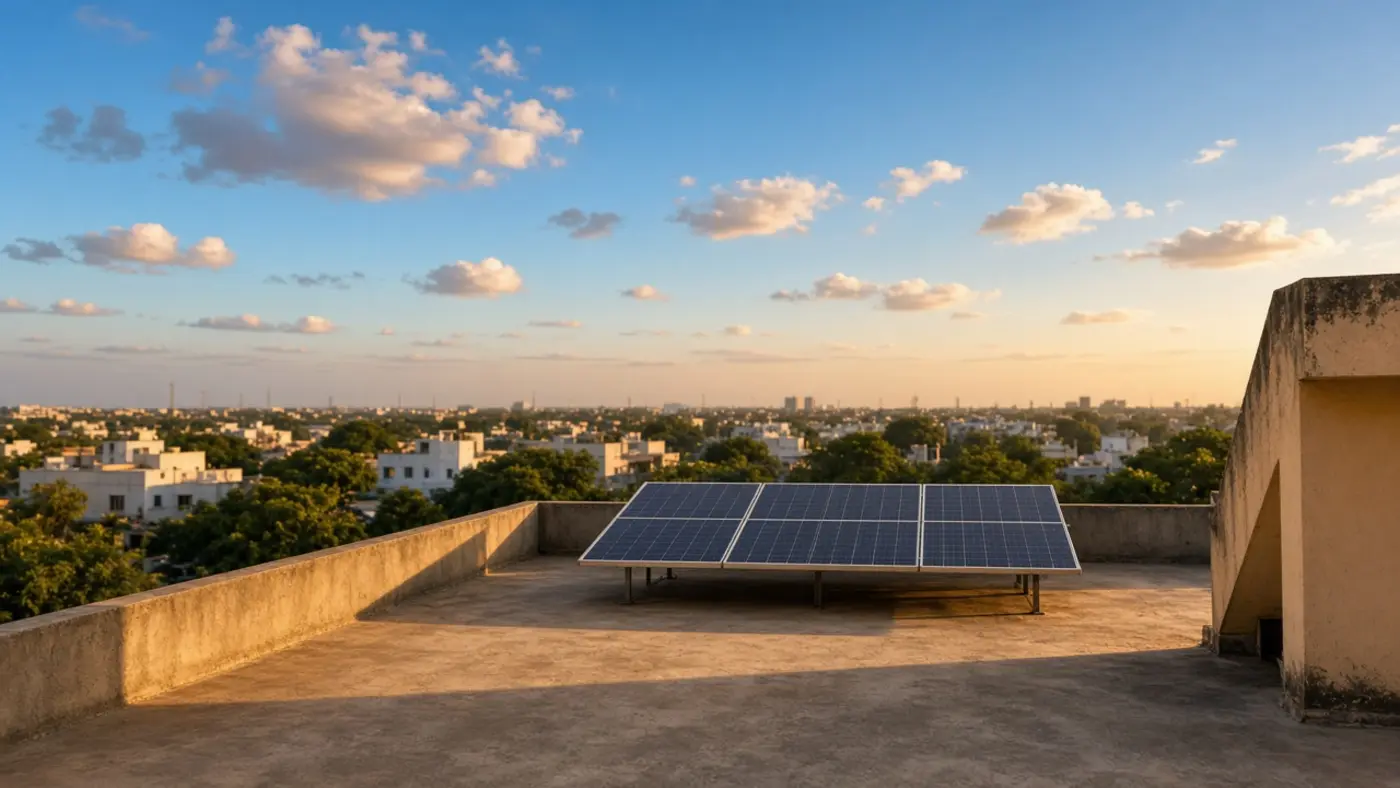
- Rooftop solar — if you are above 600 units bi-monthly, see our guide on PM Surya Ghar in Chennai (net metering and subsidy caps apply).
- Pre-monsoon wiring check — see discom safety advisory before water meets bad earthing.
Official platforms
| Need | Where |
|---|---|
| Pay bill / view history | tnebnet.org |
| Tariff calculator | Tariff Check |
| Discom announcements | tangedco.gov.in |
| TANGEDCO mobile app | Search “TANGEDCO” on Google Play / App Store |
| Section office complaint | Consumer number + registered mobile on portal |
Branding note: Colloquially Chennai still says “EB bill” or “TNEB”; legally the discom is TANGEDCO and the consumer portal is TNPDCL. Use the names on your bill when filing complaints.
Related reading on mychennaicity.in
- No tariff hike, yet EB bills surge — July–August 2026 — TNPDCL’s 3.70-lakh reinspection, heat vs meter faults, what to check.
- OMR — Perungudi to Sholinganallur — corridor hub for apartment-town context.
- Consumer topic — bills, apps, and household costs.
- Chennai rooftop solar subsidy (PM Surya Ghar) — when slab bills push you toward PV.
- Pre-monsoon electrical safety — wiring before squalls.
- Chennai local news — latest city desk stories.
Also on MyOMR.in
- July–August EB bill shock — OMR desk
- TNEB bill calculation 2026 — OMR examples
- EB Bill Hub — unit pages, estimator, solar compare
- OMR rooftop solar subsidy
What this means in Chennai
Local impact, institutions, and what residents should watch next.
Why your June 2026 bill may feel higher than March
Season + billing window. June statements often capture April–May, when Chennai humidity and heat drive AC compressor hours. A flat that averaged 380 units in winter can crest 550+ in the same bi-monthly window without any new appliance — triggering telescopic slabs.
Work-from-home density. Perungudi–Sholinganallur towers still carry dual-WFH households: always-on routers, monitors, and kitchen appliances between 9 am and 8 pm add steady baseload on top of cooling.
Water timing. When metro water is erratic, terrace pumps run longer. That load is invisible until the bi-monthly bill lands.
Not always a “wrong meter.” Slab cliffs produce legitimate jumps. Verify first; dispute second.
What the state did in July 2025
TNERC’s FY 2025–26 order applied a 3.16% CPI-linked revision across categories. For domestic LT I-A, the Tamil Nadu government paid TNPDCL a subsidy so household energy slabs did not rise — the second year in a row for full domestic shielding, per state press releases and Energyworld coverage.
That does not mean bills stay flat if you use more units — only that the per-unit schedule for homes did not increase. Apartment common supply and commercial categories did see increases.
When to escalate
Contact the section office if: billed units exceed meter delta, tariff code is wrong (domestic vs commercial), or you have proof of meter stuck / bypass (tampering is criminal — let officials inspect). Keep photos of the meter, PDF bills, and calculator screenshots in one folder before you visit.
This article is consumer education, not legal or electrical advice. For rewiring, use a licensed contractor; for billing disputes, use TNPDCL channels.
Soundbite
Your June EB bill is a summer story told in kilowatt-hours — understand the 500-unit cliff, run the official calculator, then argue with data if something still does not match.
Advertisement carousel. Rotation pauses when you hover or focus inside.
Official sources
This page is an editorial rephrase and analysis based on publicly reported information. Read the original source for full context.
FAQ
Most household (LT I-A) connections are billed bi-monthly — one bill covers roughly two months of consumption. Choose Bi-monthly on the official tnebnet.org tariff calculator unless your bill states a shorter cycle.
Explore the site
More from mychennaicity.in
Chennai today, local news, jobs, events, gold rate, and a moderated WhatsApp community — one city desk.
- Chennai today60-second morning card
- WhatsApp communityModerated Chennai updates
- Chennai local newsCivic desk & neighbourhood stories
- Afford this areaTake-home vs rent check
- Jobs in ChennaiOpen roles across the city
- Which Chennai are you?Playful neighbourhood quiz
New here? How to use mychennaicity.in — guides for residents, job seekers, admins, and more.
Promote your business to Chennai readers
Get visibility across local news, events, jobs and area pages.
Reader group: The my chennai city reader group — short updates and civil discussion, same standards as the site. Opens WhatsApp after you tap.
Tip the Chennai desk
Spotted something we should look at — safety, civic works, consumer rip-offs, or a human story? A short message is enough; links and dates help.

Advertisement carousel. Rotation pauses when you hover or focus inside.